
Early access
Stripe
Not built yet — and we would rather say so. If you bill through Stripe, tell us and we will build the sales read against real businesses instead of guessing.
Why connect StockFlow to Stripe?
What you can do today
Run your shop checkout on Yoco, PayFast or PayPal and keep your catalogue, stock, cost and invoices in StockFlow. That part is live.
What we're planning for Stripe
Read-only sales: successful Stripe charges land as sales in StockFlow so stock comes down and the sale reconciles. Checkout would stay entirely on Stripe.
Bring your own records in the meantime
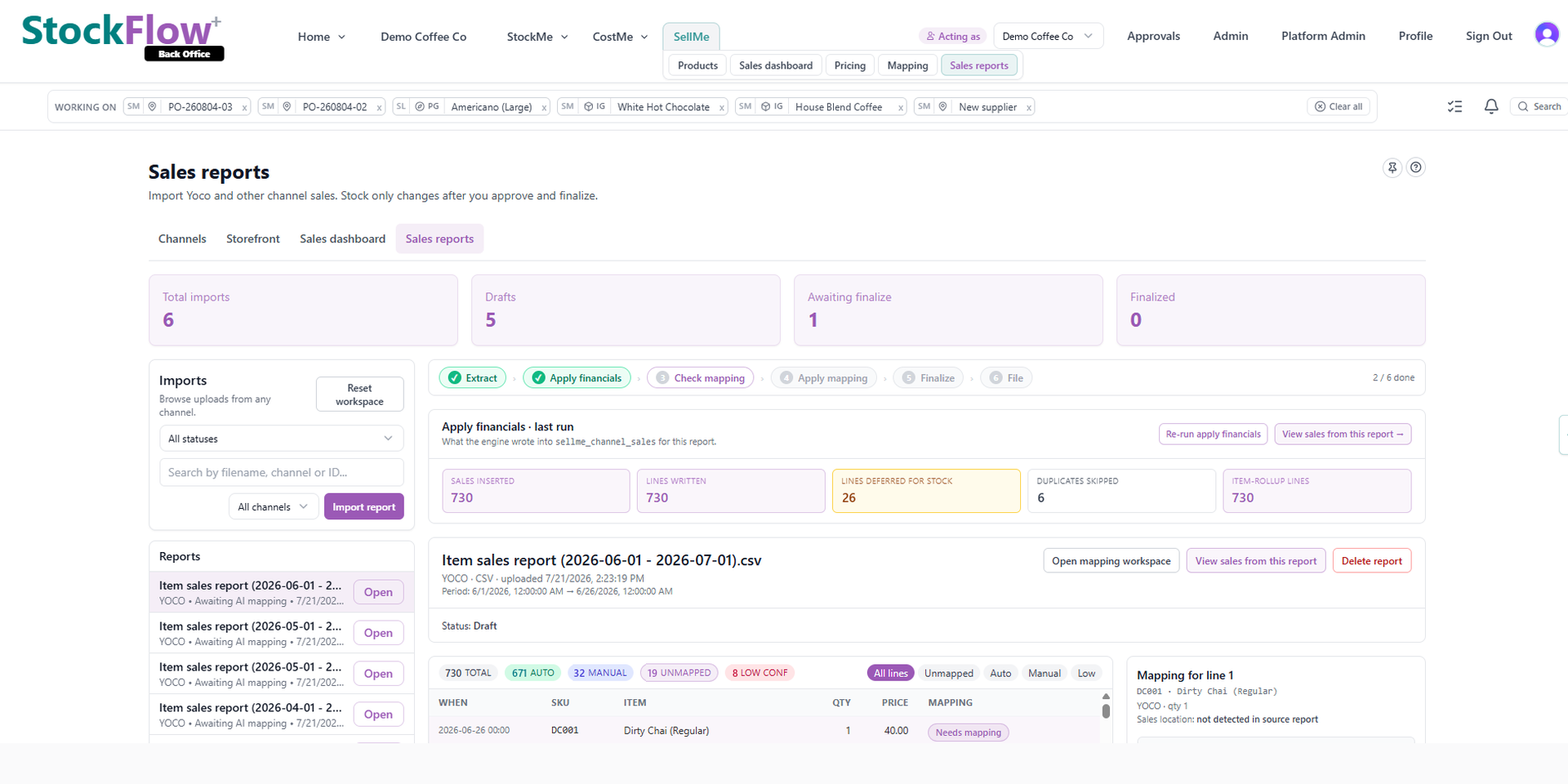
Sales you take elsewhere can be brought in from a report file, so your stock and margin still reflect what actually sold.
Your books either way
The accounting hand-off to Xero and Sage does not depend on which gateway you use.
How the Stripe integration works
- 01
Tell us you use Stripe
Join the list on this page. Volume and how you bill (one-off or recurring) shapes what we build first.
- 02
Start on what works now
Set up stock, costs and your catalogue, and take shop payments on Yoco, PayFast or PayPal.
- 03
Switch the sync on when it ships
When the Stripe sales read is live you connect it from integration settings — nothing you have set up changes.
Stripe integration FAQ
Can I take shop payments through Stripe today?
No. StockFlow shop checkout supports Yoco, PayFast and PayPal. If you already bill customers through Stripe you can keep doing that outside StockFlow.
Is any part of the Stripe integration live?
No. Nothing Stripe-specific ships yet. Sales taken through Stripe can be brought in from a report file in the meantime.
What will land first?
Read-only sales sync, so stock and reconciliation are right. Writing back to Stripe is not planned.
Want Stripe sales sync?
Join the list and we will let you know when it is live — no obligation.